The Visual Effect of Structured Dresses: Shape, Balance and Fit
The lines of a dress affect what you notice first: a collar frames the face, a seam guides the eye and a belt draws attention to the waist. You can use those details deliberately when getting dressed. They are visual styling choices, not evidence of competence, leadership ability or a guaranteed psychological response.
Use one visual focal point
Start with the feature you enjoy most. A contrast collar may be enough on its own; a defined waist can lead the outfit without a statement necklace. Repeating one color or finish in your accessories can make the combination feel coordinated to you.
How someone responds to an outfit depends on context, culture and personal preference. There is no universal rule that a structured dress makes a person look more capable or that a soft dress makes someone more approachable. Choose details that fit your setting and your own taste.
| Visible detail | Styling option | Fit check |
|---|---|---|
| Collar or bow | Keep nearby accessories simple if you want it to lead. | Check neck comfort and button placement. |
| Waist seam or belt | Use it to emphasize the waist if you like that effect. | Check that it sits comfortably when seated. |
| Vertical seam or placket | Repeat a simple line with a plain shoe or bag. | Make sure it lies without pulling or gaping. |
| Volume at the sleeve or skirt | Balance it with a simpler detail elsewhere if desired. | Keep enough room for movement and layers. |
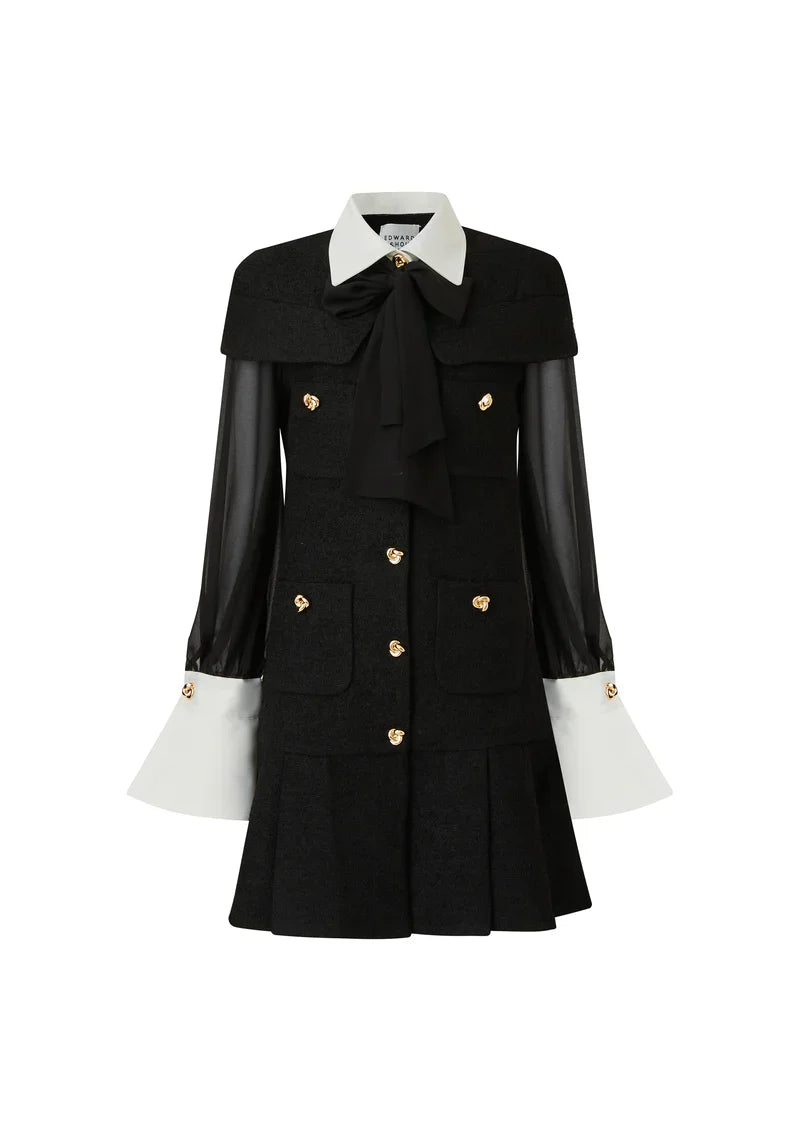
EDWARD ACHOUR contrast-collar dress

The EDWARD ACHOUR dress illustrates a strong focal point at the collar and cuffs. Its bow and contrast trim already provide visual detail. A simple earring lets those features remain central; assess the sheer sleeves and shorter hem for your workplace independently from the styling effect.
Materials: 100% polyester woven fabric.
Before choosing: Confirm lining and care details before ordering. Check both sleeve transparency and seated hem coverage.
NISSA navy A-line midi

The NISSA navy midi illustrates waist definition with a flared skirt. The shape can be styled with a quiet bag and shoe if you want an uncluttered outfit. Check that the dress accommodates your posture and movement; a defined waist does not physically improve posture.
Materials: 92% polyester, 8% spandex; 97% viscose, 3% spandex lining.
Before choosing: Use the NISSA Romanian size chart; confirm bust and waist ease. The label calls for delicate dry cleaning.
Separate comfort from a promised confidence effect
A familiar outfit that fits well may help you feel prepared, but no dress can guarantee confidence or composure. Notice your own response during a try-on. If you are repeatedly adjusting a neckline or holding your body differently to make a dress sit correctly, investigate the fit.
Preparation can be practical: choose shoes you have worn comfortably, check the care label and set out a suitable layer. Those steps address specific sources of inconvenience without making claims about how clothing changes the brain.
Try a small styling comparison
Put on the same dress with two accessory combinations. Take a front and side photograph in similar light, then choose the version that suits the occasion and feels like you. Keep the experiment personal; you do not need a rule about authority, height or body shape to decide which outline you prefer.
Before you order
Browse structured dresses, select your size or color, and check the live product price and availability. Compare the brand’s size chart with your measurements and review the item’s final-sale label and current return policy.
Continue your guide
Structured vs Soft Silhouettes: Shape, Fit and Everyday Use, What Makes a Dress Structured? Seams, Fabric and Fit Explained, How to Dress Confidently and Own Your Style.