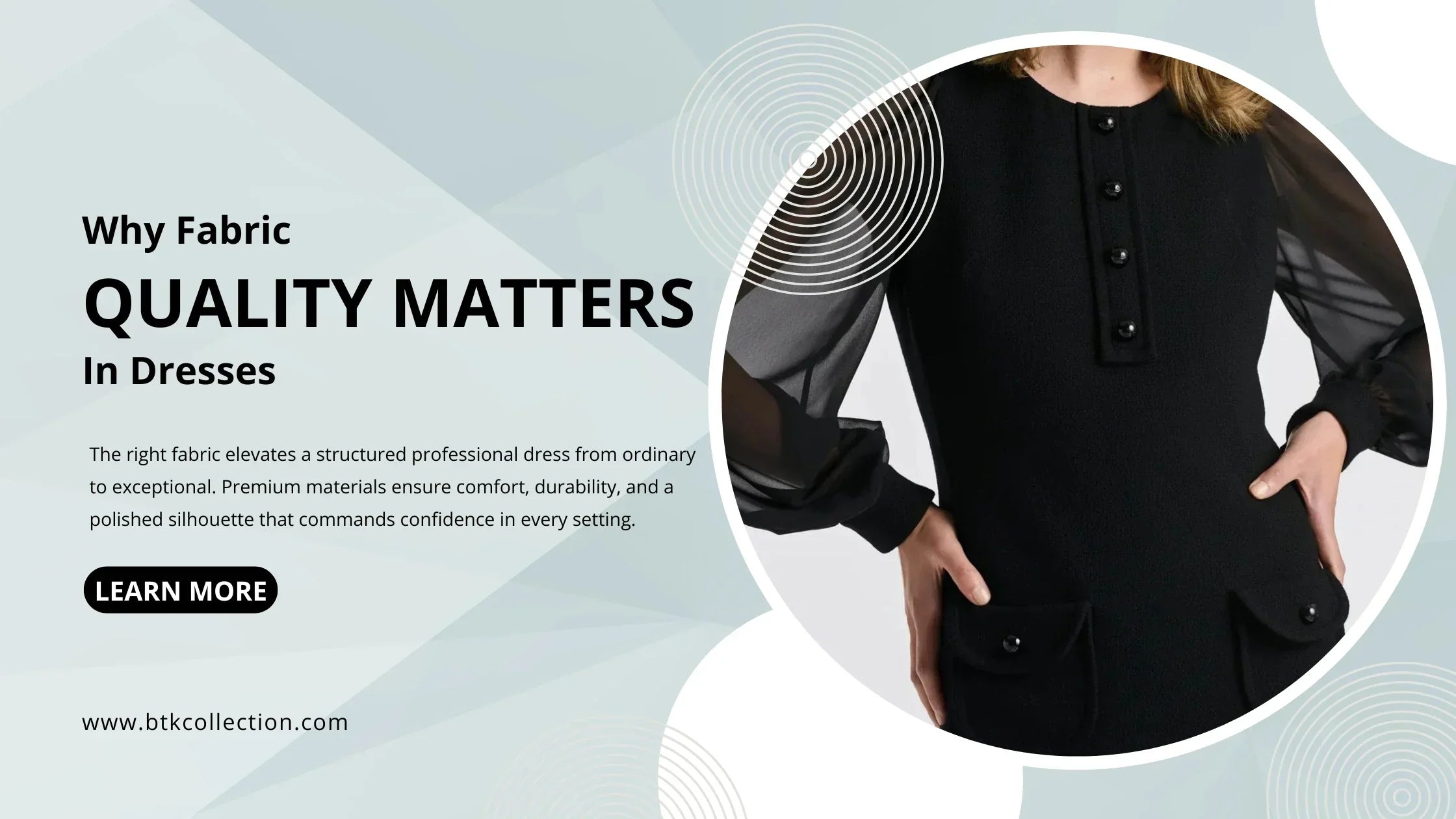
Why Fabric Quality Matters in Structured Professional Dresses
Silhouette may be the first thing you notice in a dress, but fabric is what determines whether that silhouette lasts through a full workday. A structured professional dress has to handle sitting, commuting, meetings, presentations, and changing temperatures without losing its shape.
For women building a polished work wardrobe, fabric quality is not a minor detail. It affects wrinkle resistance, seam stability, waist definition, shoulder structure, comfort, and long-term wear. The right textile helps a professional dress look composed in the morning and still polished at the end of the day.
This is why structured work dresses depend on more than tailoring alone. Construction creates the shape, but fabric preserves it. To understand the construction side more deeply, read BTK COLLECTIONS’ guide to Structured Work Dresses for Modern Professionals.
Fabric Is What Helps a Professional Dress Hold Its Shape

Professional clothing must perform beyond appearance. Throughout a typical workday, a structured dress has to handle movement, sitting, standing, commuting, meetings, and changing temperatures without losing its polish.
This is especially important when selecting women’s work dresses and office-ready styles. A professional dress should not collapse, cling, wrinkle excessively, or stretch out after a few hours of wear. The fabric must support the garment’s shape and help it look refined from morning to evening.
High-quality fabrics help:
-
Preserve shape throughout the day
-
Reduce visible wrinkling
-
Improve comfort during long work hours
-
Support professional tailoring
-
Extend garment lifespan
-
Maintain a refined appearance after repeated wear
A professional dress should feel as polished at the end of the day as it did when first worn, and that consistency starts with fabric selection.
Fabric Weight vs. Fabric Quality

Fabric weight and fabric quality are related, but they are not the same.
Fabric weight refers to how substantial a textile feels. Mid-weight and heavier fabrics often support structured dresses better because they resist sagging, cling, and collapse.
Fabric quality refers to the fiber content, weave, surface finish, recovery, and durability. A quality fabric should return to shape after movement, resist pilling, hold seams cleanly, and maintain a smooth appearance over time.
A heavy fabric is not automatically better. A structured work dress needs the right balance of weight, recovery, breathability, and polish.
The Best Fabrics for Professional Dresses
Different fibers serve different professional needs. Below are some of the most reliable textile categories for structured workwear and professional dresses.
Wool and Wool Blends

Wool and wool-blend fabrics are long-term wardrobe investments. They offer resilience, temperature regulation, and excellent shape retention.
Wool blends work well for:
-
Formal professional dresses
-
Cold-weather office wardrobes
-
Executive dressing
-
Long-term capsule wardrobes
-
Tailored silhouettes
Wool crepe is particularly valuable because it combines structure, flexibility, and a refined surface.
Crepe
Crepe is one of the most reliable fabrics for professional dresses because it offers structure without looking stiff. Its subtle texture helps disguise minor wrinkles, while its drape gives the dress movement.
Crepe works especially well for:
-
Client meetings
-
Office presentations
-
Business lunches
-
Desk-to-dinner dressing
-
Professional midi dresses
A structured crepe dress is a strong option when you want polish, comfort, and versatility in one piece.
Ponte Knit
Ponte is ideal for everyday office wear when the fabric is dense enough to hold its shape. Unlike thin jersey, ponte has more body and better recovery, which allows it to move with the wearer without losing structure.
Ponte works well for:
-
Daily work dresses
-
Business casual offices
-
Travel days
-
Long meetings
-
Comfort-focused professional dressing
The key is density. Thin stretch knits can cling or stretch out, but a quality ponte knit can look smooth, tailored, and office-appropriate.
Tweed
Tweed brings texture, structure, and visual authority to professional dressing. Its woven surface gives depth without relying on shine or embellishment.
Tweed is especially useful for:
-
Formal offices
-
Executive meetings
-
Fall and winter workwear
-
Structured sheath dresses
-
Business events
Because tweed naturally has body, it helps support seams, waist shaping, and clean vertical lines.
Structured Cotton Blends
Cotton can work beautifully for professional dresses when it has enough body. Lightweight cotton may wrinkle or collapse, but structured cotton blends can feel breathable while still looking polished.
Structured cotton blends are best for:
-
Spring workwear
-
Summer office dresses
-
Warm-weather professional events
-
Daytime meetings
-
Breathable structured dressing
For professional settings, cotton should feel crisp, not flimsy.
Fabrics to be careful with in work dresses


Not every attractive fabric performs well in a professional setting. Some materials look good on a hanger but lose shape quickly during real wear.
Be careful with:
-
Thin jersey
-
Lightweight chiffon
-
Overly elastic knits
-
Very shiny synthetics
-
Unstable bias-cut fabrics
-
Extremely lightweight materials with little body
These fabrics may work for casual or occasion dressing, but they are less dependable when the goal is a structured professional silhouette.
For a broader comparison of dress shapes, BTK COLLECTIONS’ Structured vs Soft Silhouettes.
How to Choose Fabric Based on the Work Occasion
|
Fabric |
Best For |
Why It Works |
|
Crepe |
Presentations, meetings, desk-to-dinner outfits |
Polished texture, movement, and wrinkle resistance |
|
Ponte |
Everyday office dresses |
Comfort, stretch recovery, and smooth structure |
|
Tweed |
Formal offices and business events |
Texture, density, and strong shape retention |
|
Wool Blend |
Executive dressing and cooler seasons |
Longevity, resilience, and refined structure |
|
Structured Cotton Blend |
Spring and summer workwear |
Breathability with enough body for polish |
Choosing fabric by occasion helps shoppers select a dress that fits both the work environment and the demands of the day.
How Fabric Affects Fit and Proportion
Fabric changes how a dress sits on the body. A structured fabric can define the waist, support vertical seams, and create a cleaner line from shoulder to hem. A weak fabric may cling, pull, wrinkle, or distort the intended shape.
For professional dressing, the best fabrics usually have three qualities:
-
They hold their shape
-
They recover after movement
-
They look refined under office lighting
Matte and lightly textured fabrics often appear more sophisticated than overly shiny materials. Shine can reflect light unevenly and distract from the dress silhouette.
For more detail on construction, read BTK COLLECTIONS’ guide to What Makes a Dress Truly Structured?
Fabric Performance Throughout the Workday
Professional garments endure:
-
Sitting for extended periods
-
Standing presentations
-
Movement between meetings
-
Daily commuting
-
Climate-controlled environments
Textiles must:
-
Resist creasing
-
Maintain waist shape
-
Support shoulder structure
-
Recover after movement
-
Retain a polished appearance
Textile integrity ensures a garment performs from morning to evening without constant adjustment.
Fabric and Seasonal Rotation
Fall & Winter
For cooler months, choose fabrics with more body and warmth:
-
Wool blends
-
Tweed
-
Bouclé
-
Heavier crepe
-
Dense ponte
These fabrics help structured dresses maintain shape while feeling seasonally appropriate
Spring & Summer
For warmer months, choose breathable fabrics that still have structure:
-
Structured cotton blends
-
Mid-weight crepe
-
Lightweight woven blends
-
Breathable lined dresses
The goal is comfort without losing polish. A summer work dress can be lighter, but it should not be flimsy.
For capsule wardrobe planning, read BTK COLLECTIONS’ Structured Capsule Wardrobe for Professional Women article.
Fabric and Investment Value
High-quality textiles extend garment lifespan significantly.
Benefits include:
-
Reduced fabric fatigue
-
Maintained seam tension
-
Stable silhouette over time
-
Improved cost-per-wear
-
Fewer seasonal replacements
Investment dressing depends not only on silhouette but also on fiber performance.
A well-constructed wool, ponte, or crepe dress can remain a wardrobe staple for years while maintaining its professional appearance.
Fabric Checklist Before Buying a Professional Dress
Before choosing a structured work dress, check the following:
-
Does the fabric hold its shape in product photos?
-
Does the material look too thin or clingy?
-
Is there enough body to support the waist and seams?
-
Does the dress include lining or reinforcement where needed?
-
Will the fabric wrinkle easily during sitting or commuting?
-
Does the surface look matte, refined, and office-appropriate?
-
Does the fabric match the season and work occasion?
A professional dress should make the day easier, not require constant adjustment.
Fabric Matters More Than Trend
Trends change every season. Textile performance endures.
A strong silhouette cannot survive without supportive fabric. Material integrity determines how well a garment performs over time and how professional it continues to look after repeated wear.
For further insight into construction and tailoring, explore What Makes a Dress Truly Structured?
Final Takeaway: Textile Integrity Defines Professional Dressing
Fabric quality is one of the biggest differences between a dress that simply looks professional and one that performs professionally.
A strong silhouette starts with construction, but it depends on fabric to hold that structure through real wear. Crepe, ponte, tweed, wool blends, and structured cotton blends are reliable choices because they balance shape, comfort, and long-term polish.
When choosing structured professional dresses, look beyond color and trend. Focus on fabric, fit, and how the garment will perform throughout the day.
Explore BTK COLLECTIONS’ Structured Professional Dresses collection to find polished workwear styles selected for shape, fabric, and everyday professional wear.