How to Choose Your Dress Size Online: Measurements, Size Charts & Fit
To choose your dress size online, measure your bust, waist and hips, compare those measurements with the correct brand’s size chart, and read the individual dress’s fit notes. Then check its fabric, lining, silhouette and any available garment measurements.
Your usual size is a starting point—not a guarantee across different brands. A dress can fit around your waist but pull across your bust, sit too low through the shoulders or place its waist seam below your natural waist.
Understanding those differences helps you choose more confidently, whether you are shopping for a fitted work dress, a flowing maxi or a wedding guest dress.
How to Find Your Dress Size in Five Steps
Before choosing a size, work through these checks.
| Step | What to do |
|---|---|
| 1. Measure your body | Take current bust, waist and hip measurements. |
| 2. Find the correct chart | Use the size guide associated with the brand or specific product. |
| 3. Identify the measurement type | Check whether the numbers describe the body, the finished garment or a garment laid flat. |
| 4. Assess the construction | Read the fabric, lining, stretch, closure and fit information. |
| 5. Check proportions and movement | Consider shoulders, torso length, sleeves, hem and slit placement. Ask about missing information before ordering. |
Do not stop at “I normally wear medium.” The more useful question is: “Does this size accommodate my measurements in the areas where this dress fits closely?”
How to Measure Your Bust, Waist and Hips for a Dress
Use a flexible measuring tape and a mirror. Wear the undergarments you expect to wear with the dress, stand naturally and breathe normally. The tape should sit comfortably against your body without compressing it.
For circumference measurements, keep the tape level around your body. Measure twice and record your numbers with their units.
| Measurement | How to take it | Mistake to avoid |
|---|---|---|
| Bust | Measure around the fullest part of your bust and across your back. | Substituting your bra size for your bust circumference. |
| Natural waist | Find your natural waist, often near the crease formed when you bend gently sideways. Measure without holding your stomach in. | Measuring wherever your trousers happen to sit. |
| Hips | Measure around the fullest part of your hips and seat. Check from the side that the tape includes the fullest area. | Measuring only around your hip bones. |
| Upper arm | For fitted sleeves, measure around the fullest part of your upper arm with your arm relaxed. | Assuming sleeves will fit because the bust measurement matches. |
If you cannot keep the tape level around your back, ask someone to help. Small measurement differences can matter in a closely fitted bodice.
Keep inches and centimeters clearly labeled. If you need to convert, one inch equals 2.54 centimeters.
Body Measurements vs Garment Measurements: Know What You Are Comparing
A body measurement describes you. A garment measurement describes the dress. They are related, but they are not interchangeable.
| Measurement type | What it means | How to use it |
|---|---|---|
| Body measurement | Your actual circumference or length. | Compare it with a chart explicitly describing body measurements. |
| Finished garment measurement | The dimensions of the completed dress. | Consider the intended fit, construction and room needed for movement. |
| Flat garment width | A straight measurement across a dress laid flat. | Confirm where and how it was measured before comparing it with a circumference. |
| Reference-size measurement | A measurement taken from one particular size. | Use it only for that size unless additional measurements are provided. |
A listing that says “Chest: 18 inches” needs context. Is that a flat width? Where was the tape placed? Which size was measured? Was the fabric relaxed or stretched?
Worked Example: An 18-Inch Flat Chest Measurement
The following numbers are hypothetical and do not represent a fit recommendation for a particular BTK dress.
| Example measurement | Amount |
|---|---|
| Dress measured flat across the chest | 18 inches |
| Approximate circumference, where doubling is appropriate | 36 inches |
| Shopper’s bust circumference | 35 inches |
| Approximate difference | 1 inch |
That arithmetic does not establish that the dress will fit comfortably.
A shaped bust, darts, a restrictive lining or a different measurement point can affect the comparison. A stretch knit and a fitted non-stretch dress also need different interpretation.
Do not turn this example into a rule that every dress should be one inch larger than your body. Confirm the measurement method and assess the whole garment.
How to Measure a Dress You Already Own
A well-fitting dress can provide useful context when shopping online. Choose a comparison garment with similar construction.
Compare a fitted woven dress with another fitted woven dress, or a flowing smocked-waist dress with a similar style. A loose stretchy dress will not reliably tell you how a tailored, non-stretch dress should fit.
To measure:
- Fasten the dress as it would be worn.
- Lay it on a flat surface without stretching it.
- Smooth it gently without pulling pleats or gathers flat.
- Measure the chest, waist and hips at clearly identified points.
- Record the length and its starting point.
- Note whether smocking or elastic was measured relaxed.
Use the same method as the retailer whenever possible. A length taken from the highest shoulder point is not interchangeable with a measurement taken from the back neckline.
If a dress has a shaped bodice, elastic panels or an uneven hem, ask which measurements will provide the most useful comparison.
How to Read a Dress Size Chart Across Different Brands
A size label describes a position within a sizing system. It does not promise identical dimensions across brands.
| Check | Why it matters |
|---|---|
| Brand name | Different brands may use different proportions and measurements. |
| Sizing system | US, UK, French, Romanian and other labels are not interchangeable. |
| Units | Inches and centimeters must be compared consistently. |
| Chart type | A body-size chart and a finished-garment chart answer different questions. |
| Style-specific notes | A particular design may fit differently from the brand’s general guidance. |
| Reference size | Measurements taken from size S do not automatically apply to size M or L. |
When a chart gives body measurements, compare your body directly with those numbers. Do not add extra inches to your body measurements before using that chart.
When finished-garment measurements are provided, consider the space between your body and the garment, along with its intended fit.
For numbered international sizes, identify the actual sizing system. A label described only as “European size 40” may not provide enough information for a dependable conversion.
Between Dress Sizes? Let the Construction Guide You
There is no universal answer to “Should I size up or down in a dress?”
Start by identifying where the dress fits closely. A fitted bodice, narrow skirt, structured shoulder or non-stretch sleeve may influence the decision more than an adjustable belt.
| Your situation | What to check before choosing |
|---|---|
| Bust and waist fall into different sizes | Compare both measurements and check how closely the bodice fits. |
| Hips need a larger size in a pencil dress | Confirm hip room, lining and sitting comfort. Choosing by waist alone may create pulling. |
| Hips need a larger size in a full-skirt dress | Check whether the skirt—and any lining—actually provides sufficient room. |
| The waist is smocked | Check the comfortable waist range, plus the fixed bust, shoulders and armholes. |
| The dress is non-stretch | Do not expect the fabric to stretch enough to compensate for an undersized garment. |
| Sizing up makes the shoulders or neckline too loose | Ask for additional measurements. A larger size may not solve the underlying proportion issue. |
A belt can adjust the appearance of the waist. It cannot create extra room across a tight bust or hip.
Alterations may help some garments, but they should not be assumed. Moving shoulder seams, adjusting a lined bodice or altering embellished fabric can be more involved than shortening a plain hem.
How Stretch, Lining and Ease Affect Dress Fit
What Does “Ease” Mean?
Ease is the difference between your body measurement and the corresponding finished-garment measurement. Some room allows breathing, sitting and movement; additional room may be part of the dress’s design.
A flowing dress can have considerable space through the skirt while fitting closely at the bust. Some stretch garments are designed with measurements smaller than the body because the fabric expands when worn.
That is why one fixed allowance cannot determine the right size for every dress.
Stretch Does Not Guarantee a Comfortable Fit
A fabric’s fiber percentages do not tell you exactly how far it stretches or how well it recovers. Stretch direction also matters.
Check whether the product description refers to the whole garment or only one component. A stretchy outer fabric may still be limited by its lining, seams or closures.
Does a Smocked Waist Mean the Whole Dress Stretches?
No. Smocking may provide flexibility only where it appears.
The bust, shoulders, sleeves and skirt can remain relatively fixed. A back-smocked waist also differs from a fully smocked bodice.
Why the Lining Matters
The lining can affect fit independently of the outer fabric. A full skirt may have a narrower lining underneath, and a stretch shell may be paired with a less flexible lining.
“Lined” also does not necessarily mean that the sleeves and entire skirt are lined. Check coverage and opacity separately from circumference measurements.
For more construction details to assess before buying, read our guide to identifying dress quality.
BTK COLLECTIONS Dress Construction
These three dresses show why the same sizing approach does not work for every silhouette.
| Dress | Construction and fit |
|---|---|
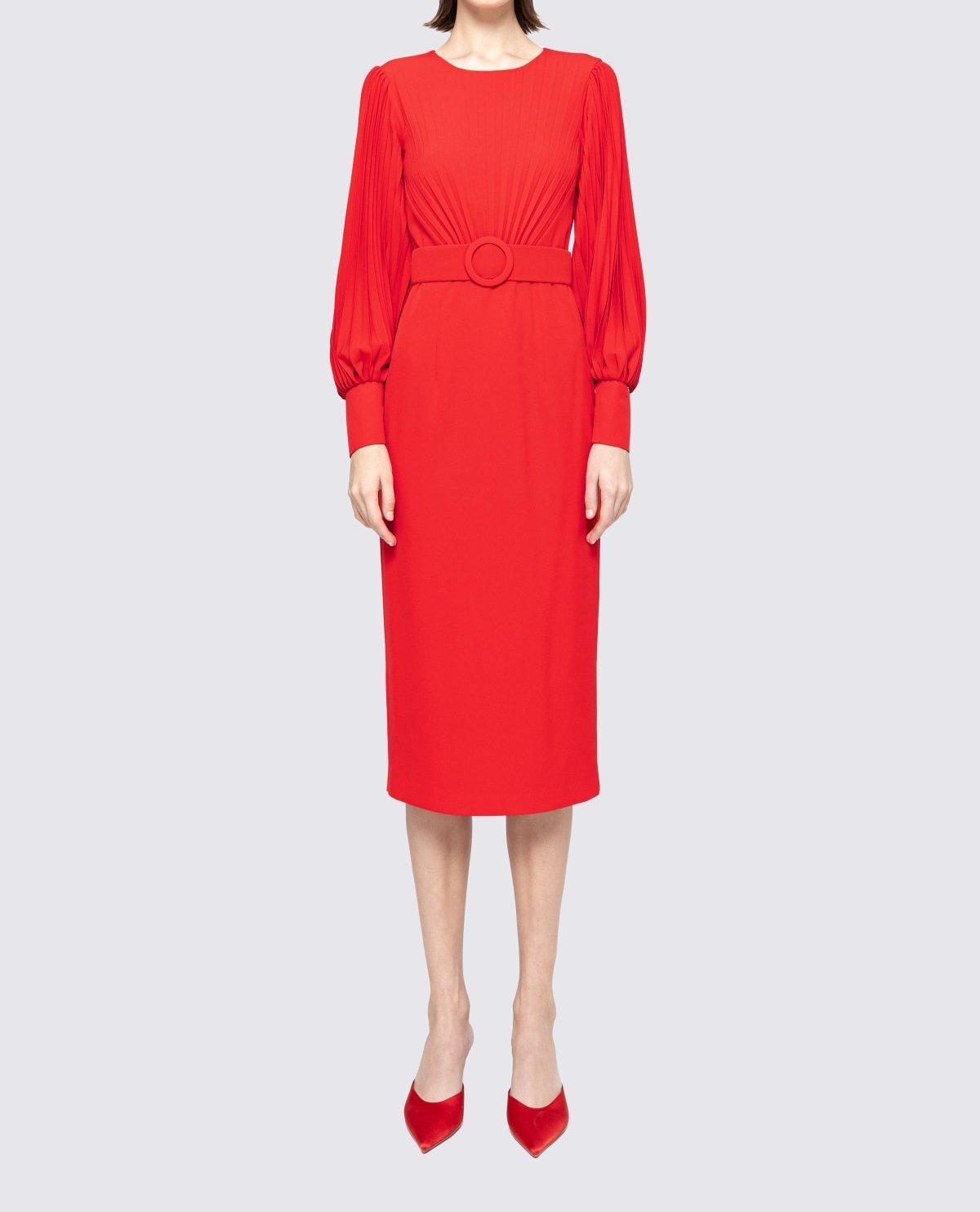
 NISSA Red Pleated Belted Pencil Midi Dress NISSA Red Pleated Belted Pencil Midi Dress
|
Fabric and construction: Fit areas to assess: Care and measurement notes: |
 Sugarlips Angelonia Black Floral Midi Dress Sugarlips Angelonia Black Floral Midi Dress
|
Fabric and construction: Fit areas to assess: Care and measurement notes: |
 Grade & Gather Asymmetrical Satin Maxi Dress Grade & Gather Asymmetrical Satin Maxi Dress
|
Fabric and construction: Fit areas to assess: Care and measurement notes: |
Check the selected variant on each product page for current price, availability and sale terms.
Fitted Pencil Dress: Check More Than the Waist
The NISSA pencil dress follows the body more closely through the waist and hips than a full-skirt style. Its listed stretch does not remove the need to compare measurements.
If your hips fall into a different size from your waist, ask about both areas. Check whether you can sit and take a comfortable stride without pulling at the skirt, lining or back closure.
Partial Smocking: Check the Fixed Areas First
Angelonia illustrates why “smocked waist” is not a complete sizing answer.
The back waistband provides flexibility, while the front waist and bodice have a different construction. Its straighter skirt and high slit also make walking and seated coverage relevant.
The brand-supplied size-S measurements should not be treated as measurements for every available size.
Flowing Skirt: Check the Bodice and Hem
The Grade & Gather satin maxi offers a flowing skirt and smocked waist. However, the V-neckline, shoulders and bodice still need to sit comfortably.
The asymmetrical hem creates another consideration: the longest point must clear the floor in your chosen shoes, while the shortest point determines how much leg is visible.
A flowing silhouette changes the fit priorities. It does not eliminate them.
Check Torso Length, Shoulders and Hem Position
Bust, waist and hips are essential, but they do not describe every proportion.
| Area | What to assess |
|---|---|
| Shoulder-to-waist length | Does the dress’s waist shaping sit where intended on your torso? |
| Shoulders and armholes | Can you reach forward without pulling or excessive gaping? |
| Neckline | Does it stay secure when you move or lean forward? |
| Sleeves | Is there comfortable room through the upper arm and elbow? |
| Hem | Where does it fall on your body? |
| Slit or uneven hem | What changes when you sit, walk or use stairs? |
To measure your front shoulder-to-waist length, start at the shoulder near the base of your neck, follow the body over the bust, and stop at the natural waist. Compare it only with a corresponding garment measurement taken using a compatible method.
For more help with proportions, explore our dress-length guide and petite dress fit guide.
What to Ask BTK COLLECTIONS Before Ordering
A specific question is more useful than asking whether a dress “runs small.”
| Information to share | Question to ask |
|---|---|
| Product link and size being considered | Are measurements available for this size? |
| Bust, waist and hips, with units | Which area is most fitted in this design? |
| Height and preferred hem position | Where is the dress length measured from? |
| Your main fit concern | Can the bust, upper arm, waist or hip area be checked? |
| Any unclear listing measurement | Is this a flat width, a circumference or a body-chart measurement? |
Try the Dress On Before Removing Tags
Try the dress with the intended undergarments and shoes. Sit, walk and reach forward gently.
Check for:
- Pulling across the bust, hips or closures.
- A waist seam that rides up or sits too low.
- A neckline that shifts or gaps.
- Tight sleeves or restricted arm movement.
- Slit coverage when seated.
- A hem that catches beneath your shoes.
Keep tags attached while assessing the item and review its final-sale status and the current return policy. Follow the policy’s separate request and mailing requirements.
Frequently Asked Questions About Choosing Dress Sizes Online
How do I find my dress size online?
Take current body measurements, use the correct brand’s chart and read the individual garment’s fit notes. Then check construction, length and any available finished measurements.
Should I size up or down when between dress sizes?
It depends on where the dress fits closely and whether those areas have usable stretch. Check the bust, waist, hips and shoulders rather than applying an automatic size-up or size-down rule.
Is a flat chest measurement the same as bust circumference?
No. A flat chest measurement is a width across the garment. Doubling it may approximate circumference when the method and construction allow, but confirm the measurement point and reference size first.
Should garment measurements be larger than body measurements?
Non-stretch dresses generally need room for movement, but the amount depends on the design. Some stretch garments intentionally fit with smaller finished dimensions. Use the garment’s intended fit rather than one universal allowance.
What if my bust, waist and hips fall into different sizes?
Identify which areas are fitted in the dress and compare each relevant measurement. Ask for clarification if accommodating one area would make another too loose.
Does a smocked waist mean the entire dress is stretchy?
No. The flexible section may be limited to the waist. The bodice, sleeves, skirt or lining may have little or no stretch.
Can I choose my size from the model’s height and size?
Those details provide context, but two people of the same height can have different bust, waist, hip and torso proportions. Use your measurements and check the dress’s actual dimensions.
How do I measure shoulder to waist for a dress?
Measure from the shoulder near the base of the neck, over the bust, to the natural waist. Ask how the corresponding garment measurement was taken so the comparison is meaningful.
Your Final Dress-Size Checklist
Before ordering, confirm that:
- You used the correct brand’s size chart.
- You know whether the measurements describe a body or a garment.
- You checked the areas where the dress fits closely.
- You considered lining, stretch, torso length and movement.
- You resolved missing information and reviewed the item’s sale terms.
The right size should support how you intend to wear the dress—not simply match a familiar label. Explore the featured BTK COLLECTIONS' dresses above, and ask for help with the specific measurements that matter to your fit.