How to Layer Dresses in Fall and Winter: Tights, Boots, Jackets, Knits, and Scarves
Wearing dresses in fall and winter is one of the easiest ways to look polished while staying warm — if you layer them correctly. The key is using the right combination of tights, boots, coats, knit layers, and real cold-weather accessories so the outfit feels intentional instead of bulky.
For a broader approach to choosing layers, accessories, and ways to rewear dresses, see our complete dress styling guide.
In this guide, you will learn how to layer dresses for cold weather with practical styling advice and BTK COLLECTIONS examples that make sense in real life. From textured midis and sweater dresses to long coats and easy cardigans, these are the pieces that help you keep wearing dresses long after the temperature drops.
Cold-Weather Dress Layering at a Glance
| Layering Need | Best Solution | Best For |
|---|---|---|
| Warm legs | Opaque or thermal tights | Everyday wear, colder days, office outfits |
| Balanced hemline | Ankle boots or knee-high boots | Midi, maxi, and sweater dresses |
| Polished outerwear | Long coat or longline tailored layer | Workdays, dinners, and dressier winter looks |
| Extra warmth | Cardigan, knit layer, or thin underlayer | Cold-weather styling without heavy bulk |
| Neck warmth | Wool, cashmere, or knit scarf | Open necklines, windy days, and true winter weather |
Best Tights to Wear with Dresses in Fall and Winter

Tights are the foundation of cold-weather dress styling. They add warmth, smooth the leg line, and make dresses feel more seasonally appropriate without changing the outfit too much.
The easiest place to start is with opaque black or dark brown tights. They are the most versatile, pair well with boots, and visually ground both prints and solids. On colder days, thermal or fleece-lined tights make even more sense, especially if you are wearing midis and spending time outside. If you run cold easily, a wool-blend hosiery option is worth considering.
The goal is simple: let the tights support the dress rather than compete with it. Under midi and maxi dresses, tights often disappear visually but still add serious warmth. With sweater dresses, they help the outfit feel polished instead of too bare.
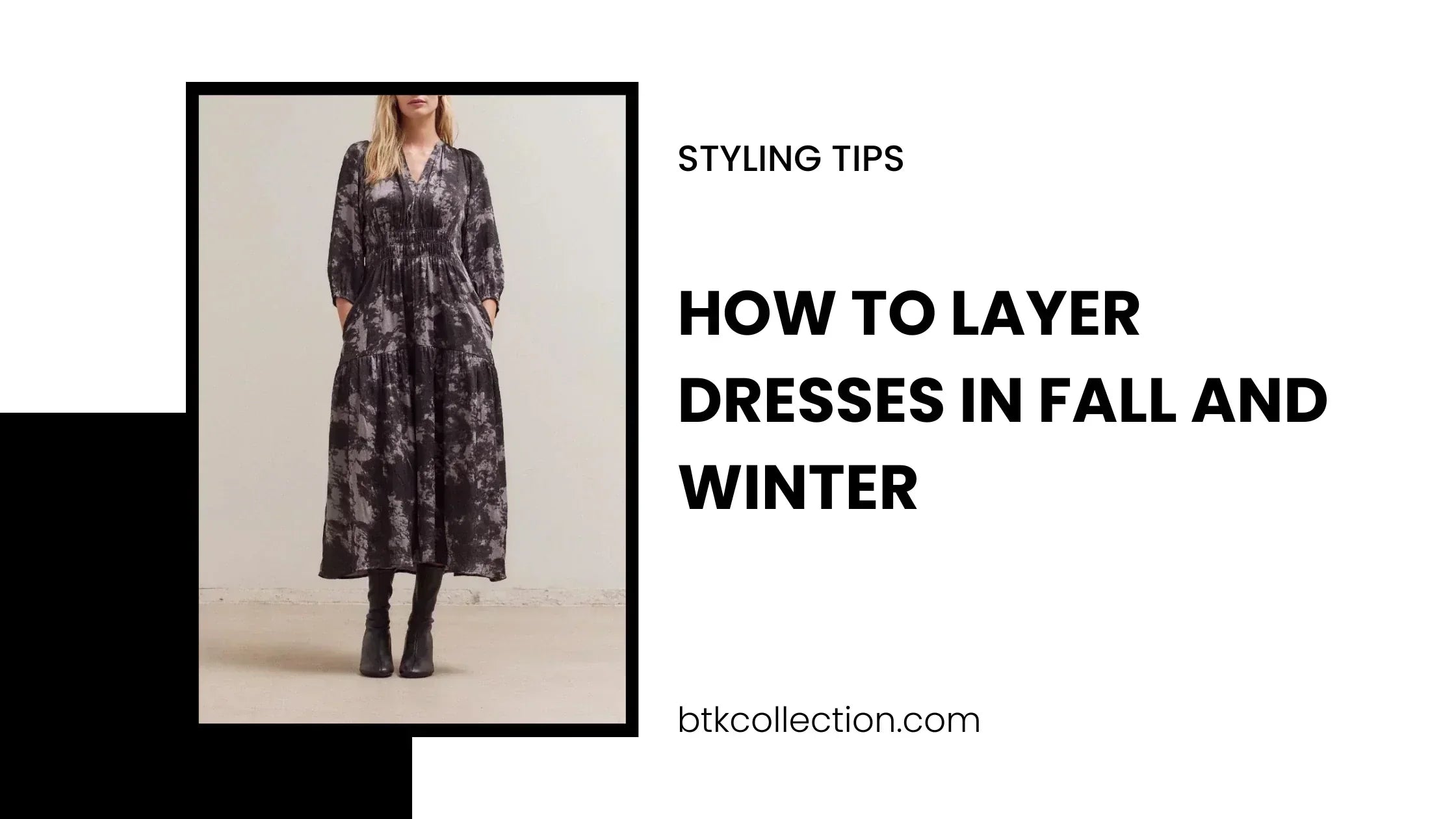
For example, the Cacao Brown Floral Jacquard Midi Dress. Its textured jacquard surface, 3/4 sleeves, and smocked waist already make it feel fall-ready, so opaque tights and ankle boots are a natural extension. The Oversize High Neck Sweater Dress works differently: it is already a relaxed knit midi with warmth and a sleeveless/cap-style arm opening, so black tights and knee-high boots give it a more grounded, winter-ready finish.
Best Boots to Wear with Midi and Maxi Dresses
Boots do most of the visual work in a fall and winter dress outfit. The trick is not just choosing a boot you like — it is matching the boot height to the dress length so the proportions feel intentional.
The easiest boot formulas
- Midi dresses + ankle boots: the most versatile everyday combination
- Midi or maxi dresses + knee-high boots: more warmth and a dressier finish
- Sweater dresses + knee-high or over-the-knee boots: more coverage and a stronger cold-weather look
Ankle boots are the easiest option for everyday wear because they work with most midis and allow a small break between the hem and the boot. Knee-high boots feel more elevated and are especially useful when you want extra warmth without adding too many layers elsewhere. For rainy or icy days, look for boots with a sturdy rubber sole for better grip and day-to-day wearability.
Boot-Friendly Dresses collection is built around lengths that work with ankle, mid-calf, and knee-high boots. The Cacao Brown Floral Jacquard Midi Dress already appears styled with ankle boots, which makes it a clean example of the everyday-midi formula, while the Oversize High Neck Sweater Dress is better with taller boots when you want a warmer, more balanced winter silhouette.
Best Jackets and Coats for Layering Over Dresses
Your outer layer matters because it is often the first thing people see. Even a simple dress can look more refined when the coat or jacket creates the right line.
For the cleanest result, think about proportion first:
- Long coats work best over midi dresses and fuller silhouettes
- Longline tailored pieces work best when the dress underneath is cleaner and slimmer
- Shorter wrap layers are usually better with shorter or straighter shapes than with longer, fuller midis
This is where product choice really matters. The Long Wool Crepe Jacket with Jewelled Buttons is listed under WEILL, and BTK’s imagery shows it both closed like a coat-dress and worn open like a longline jacket. That makes it a more specific piece than a general-purpose winter coat. The Classic Double Breasted Wool Coat is the easier all-around option for layering over longer dresses because it is built as a true winter coat. The Charcoal Collared Wrap Layer with Pockets is a lighter, mid-thigh wrap jacket designed for polish without bulk, so it makes more sense for shorter or straighter silhouettes, transitional weather, or indoor-heavy days than for longer, fuller midi dresses.
How to Use Knit Layers and Sweater Dresses in Cold Weather
Knits help in two different ways in fall and winter. Some are true layering pieces that go over dresses, and others are sweater dresses that already do a lot of the warmth work on their own.
Knit layers over dresses
Use a cardigan or easy open knit when you want softness and warmth without the weight of a full coat indoors. These pieces work best over simpler dress silhouettes and help the outfit feel cozy without looking bulky.
Sweater dresses as one-piece winter bases

Sweater dresses are different. They are not examples of knitwear layered over another dress — they are already the main piece. Once you start with a sweater dress, the next layer is usually a coat, tights, boots, or an easy cardigan rather than another dress-focused knit formula.
The strongest knit layers for this section are the Fringe Long Cardigan, which is explicitly designed for layering over dresses and tops, and the Cozy Eyelash Color Block Open Cardigan, a longline open cardigan built as an easy third piece for chilly commutes, cozy weekends, and travel days. The Oversize High Neck Sweater Dress belongs here too, but as a standalone sweater dress base, not as an example of something layered over another dress. Because the dress is with a sleeveless/cap-style arm opening and intentionally relaxed fit, it is also worth adding a practical note: if you feel the underarm area is more open than you prefer, wear a fitted tee, slim long-sleeve top, or cami underneath.
How to Style Scarves with Dresses in Cold Weather
Scarves are one of the easiest ways to make a dress outfit feel warmer and more winter-ready. They add insulation around the neck, help balance more open necklines, and make the whole outfit look more finished once you add boots and a coat.
Easy ways to wear scarves with dresses
- Drape a fine wool scarf over a long coat and midi dress for warmth without too much bulk.
- Wrap a cashmere or cashmere-blend scarf around the neck with sweater dresses and wool coats for a softer, more elevated winter look.
- Use a medium-weight knit scarf with everyday dresses, tights, and boots when you want a practical cold-weather outfit that still feels polished.
The key is to treat the scarf as a real winter accessory, not just a visual detail. Once you add a proper scarf, boots, and outerwear, even a dress that feels slightly transitional can work much better in colder weather.
Better examples for scarves
| Scarf type | Best use |
|---|---|
| Fine wool scarf | Office outfits, polished winter looks, long coats |
| Cashmere or cashmere-blend scarf | Dressier winter outfits, dinners, elevated everyday wear |
| Medium-weight knit scarf | Weekend outfits, sweater dresses, casual cold-weather layering |
3 Easy Fall and Winter Dress Outfits to Copy
The easiest way to make all of this practical is to use a few simple formulas you can repeat.
1. Workday Winter Dress
For office days, you want warmth without losing polish.

Formula:
- Boot-friendly midi dress
- Opaque black tights
- Knee-length boots
- Classic Double Breasted Wool Coat
- Minimal jewelry
This works because the base stays sleek and the coat handles most of the winter structure and polish. The Boot-Friendly Dresses collection and the Classic Double Breasted Wool Coat are the cleanest pairing for this type of formula.
2. Cozy Weekend Look
For off-duty days, the outfit should feel warm, believable, and easy to wear.
Formula:
- Oversize High Neck Sweater Dress
- Fitted tee, slim long-sleeve top, or cami underneath if you want more coverage at the arm opening
- Thick tights
- Flat knee-high or over-the-knee boots
- Classic Double Breasted Wool Coat for outdoor warmth, or Cozy Eyelash Color Block Open Cardigan for a softer indoor layer
- Crossbody bag
This is a more realistic winter formula because it respects the sweater dress’s proportions and avoids forcing a shorter wrap jacket into a longer-dress silhouette.
3. Day-to-Night Winter Midi
For a dress that needs to move through more than one part of the day, keep the base strong and let the accessories do the shifting.

Formula:
- Cacao Brown Floral Jacquard Midi Dress
- Tights
- Block-heel knee-high boots
- Classic Double Breasted Wool Coat
- Structured tote for daytime, then a smaller bag and stronger jewelry for evening
This formula works because the dress itself already has texture and presence. You do not need a short wrap layer to force a “day” version and a “night” version. The bag, jewelry, and overall polish do that job better.
Common Mistakes When Layering Dresses in Cold Weather
A few things make winter dress outfits fall apart quickly.
1. The wrong boot height
If the boot cuts the leg in an awkward place, the whole outfit can feel off even if every piece is good on its own.
2. Too much bulk
Heavy knits, bulky tights, a thick scarf, and a heavy coat all at once can overwhelm the dress silhouette. Balance matters.
3. Layers that fight the dress
Soft dresses usually look better with cleaner outer layers. More structured dresses can handle heavier textures a little better.
4. Ignoring warmth at the base
If the tights or underlayers are wrong, the whole outfit becomes harder to wear, no matter how good it looks.
FAQ: Layering Dresses for Fall and Winter
Can you wear dresses in winter without looking underdressed?
Yes. Tights, boots, coats, and knit layers make dresses feel intentional and seasonally appropriate.
What boots work best with midi dresses in winter?
Ankle boots are usually the easiest everyday option, while knee-high boots give more warmth and a slightly dressier finish.
How do you layer dresses in winter without adding bulk?
Use thin base layers, opaque tights, structured outerwear, and knit layers that support the dress silhouette instead of fighting it.
Do decorative scarf-neck dresses replace a real scarf in winter?
No. They can add visual interest, but for actual cold-weather dressing, you still need a real scarf or a warmer outer layer around the neck area.
Final Thoughts
You do not need to stop wearing dresses once the weather turns cold. You just need better layering formulas. Tights create the base, boots anchor the hemline, coats shape the outfit, knit layers add warmth, and real cold-weather accessories finish the look.
When you build around those pieces, dresses become one of the most useful parts of a fall and winter wardrobe. Instead of saving them for better weather, you keep them working much harder across office days, weekends, travel, and dinners.