
What to Wear Instead of a Coat in 50–65° Weather
There’s a narrow stretch of the calendar where getting dressed becomes unexpectedly complicated.
It’s not cold enough for winter coats. It’s not warm enough to skip a layer, and relying on a blazer rarely solves the problem.
When temperatures sit between 50° and 65°, what you need isn’t insulation — it’s regulation.
The right outer layer should:
-
Provide light coverage
-
Remove easily indoors
-
Balance proportion over dresses and tailoring
-
Adapt as the day shifts
Here’s how to approach this temperature range intentionally.
Dressing for 50–65°: Think Moderation, Not Warmth
This weather band is transitional by nature. You’ll likely experience:
-
Chilly mornings
-
Warmer indoor spaces
-
Mild midday sun
-
Cooler evenings
Heavy coats are designed for heat retention. In this range, they often feel excessive — visually and physically.
Instead of layering for survival, layer for balance.
The Most Reliable Mid-Temperature Layers
Rather than asking “What’s trending?” ask:“What performs best in this range?”
Below are the most practical outer layers for moderate spring and early fall weather.
Structured Wool Cape

Weill Reversible Wool Cape
A structured cape offers coverage without overwhelming lighter fabrics.
Why it works in moderate temperatures:
-
Holds shape without bulk
-
Sits cleanly over dresses or slim trousers
-
Removes easily once indoors
-
Provides warmth without trapping heat
Best suited for:
-
Office environments
-
Client meetings
-
Early evening dinners
-
Professional commutes
Temperature range: 45–60°
If you prefer defined lines and composed silhouettes, this is the most stable option in transitional weather.
Mid-Weight Knit Poncho
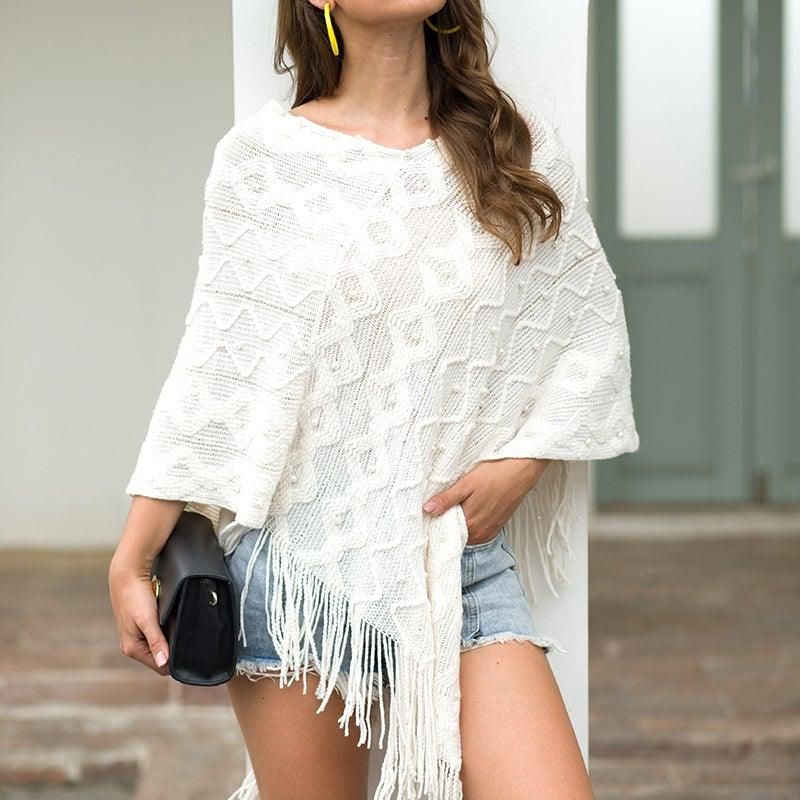
For days that don’t require structure, a knit poncho moderates temperature comfortably.
Plaid Fringe Poncho – Red / Gray / Taupe
Pearl-Embellished Fringe Poncho – Ivory / Black / Taupe / Gray
Button-Collar Fringe Poncho – Cream / Gray / Camel / Black
Why ponchos perform well in 55–65° weather:
-
Easy to slip on and off
-
Drape naturally over transitional outfits
-
Add visual interest without heaviness
-
Travel easily
Best suited for:
-
Casual outings
-
Weekend dressing
-
Travel days
-
Light layering over midi dresses
A poncho softens the look without competing with the outfit underneath.
Open Wrap for Coverage

Black Fringe Poncho Shawl
On days when you’re moving frequently between spaces, adjustability matters.
An open wrap allows you to:
-
Drape loosely
-
Cross and secure
-
Belt for shape
-
Remove quickly
Best suited for:
-
Commuters
-
Travel itineraries
-
Indoor/outdoor schedules
-
Transitional layering over dresses
This option adapts more easily than traditional outerwear.
Choosing Based on Your Day
Instead of comparing silhouettes, focus on daily function.
If you’re dressing for meetings → Structured Cape
If you’re prioritizing comfort → Knit Poncho
If you need flexibility → Open Wrap
Think about how long you’ll be outside, how often you’ll remove the layer, and whether you need structure or softness.
Outfit Pairings That Work Immediately
Professional Setting
Weill Cape + Midi Dress + Polished Boots
Relaxed 60° Afternoon
Plaid Poncho + Straight Denim + Flats
Travel Day
Black Wrap + Knit Dress + Loafers
Early Fall Repeat
Button-Collar Poncho + Long Sleeve Dress + Tall Boots
These combinations allow you to remove the outer layer without compromising the outfit.
Fabric Considerations
Moderate temperatures respond best to:
-
Wool blends for cooler mornings
-
Mid-weight knits for stable afternoons
-
Open-front layers for fluctuating environments
When selecting a layer, match the fabric density to how long you’ll be outdoors.
A Note on Timing
The 50–65° window is brief.
Once temperatures consistently exceed 70°, demand for structured layering drops.
Once temperatures fall below 45°, heavier coats return.
Transitional layers are designed for this specific band — not for deep winter or summer heat.
Explore Transitional Layers
These pieces are specifically suited to moderate spring and early fall temperatures.
Still Unsure Which Silhouette Suits You?
If you’d like a detailed breakdown of how capes, ponchos, and wraps differ structurally, explore our full comparison guide:
Poncho vs Cape vs Ruana: What’s the Difference?
That guide explains construction, silhouette impact, and when each works best.
Closing Perspective
Mid-season weather doesn’t require more layers. It requires appropriate ones.
Choose based on temperature, movement, and proportion — not habit.
When the weather sits between cold and warm, thoughtful layering makes the difference between looking prepared and looking improvised.
Explore ponchos and capes at BTK COLLECTIONS to compare current styles and available options.